

What the Evidence Actually Shows
If your GP has told you your cholesterol is high, you’ve probably already searched for it — foods that lower cholesterol, a high cholesterol diet plan, maybe cholesterol diet Australia. You’ve likely found a dozen lists telling you to eat more oats and less butter. What’s less common is an explanation of why those foods work, how much of a difference they can realistically make, and how to build a plan around your own results rather than a generic checklist. Here’s what the evidence shows.
What “High Cholesterol” Actually Means
A standard cholesterol panel looks at a few different markers: total cholesterol, LDL (often called “bad” cholesterol because it contributes to plaque build-up in your arteries), HDL (“good” cholesterol, which helps clear it), and triglycerides. Being told your cholesterol is “high” without any further explanation of which marker is driving that, and why, leaves you with a diagnosis but no real plan. A full blood test gives a clear picture of exactly which markers need attention, rather than a single number to react to.
Foods That Lower Cholesterol: What the Evidence Shows
Soluble Fibre
Soluble fibre — found in oats, legumes, barley and psyllium — binds to cholesterol in the digestive tract and helps remove it from the body before it’s absorbed. A 2023 systematic review and dose-response meta-analysis of randomised controlled trials found that soluble fibre supplementation produced significant reductions in total cholesterol, LDL cholesterol and triglycerides, with the effect increasing at higher doses (Ghavami et al., 2023). This is a dose-dependent relationship that is most effective when consumed daily as part of a routine.
Plant Sterols and Stanols
Plant sterols and stanols are naturally found in small amounts in vegetable oils, nuts and seeds, and added to certain fortified foods such as some margarines and yoghurts. Sterols and stanols reduce cholesterol by competing with cholesterol absorption in the gut. A systematic review of 125 randomised controlled trials found that phytosterol-fortified foods produced a meaningful average reduction in LDL cholesterol, with greater reductions at higher daily doses (Fontané et al., 2023). A separate clinical study found that the cholesterol-lowering effect of plant sterol supplementation was further enhanced in people who also closely followed a Mediterranean-style diet, suggesting the overall dietary pattern matters as much as any single food (Cicero et al., 2023). Current European cardiology and atherosclerosis guidelines recommend around 2 grams of plant sterols or stanols per day as part of a broader approach to managing cholesterol, used alongside, not instead of, any medical treatment your GP has recommended (Cicero et al., 2023).
Monounsaturated Fats
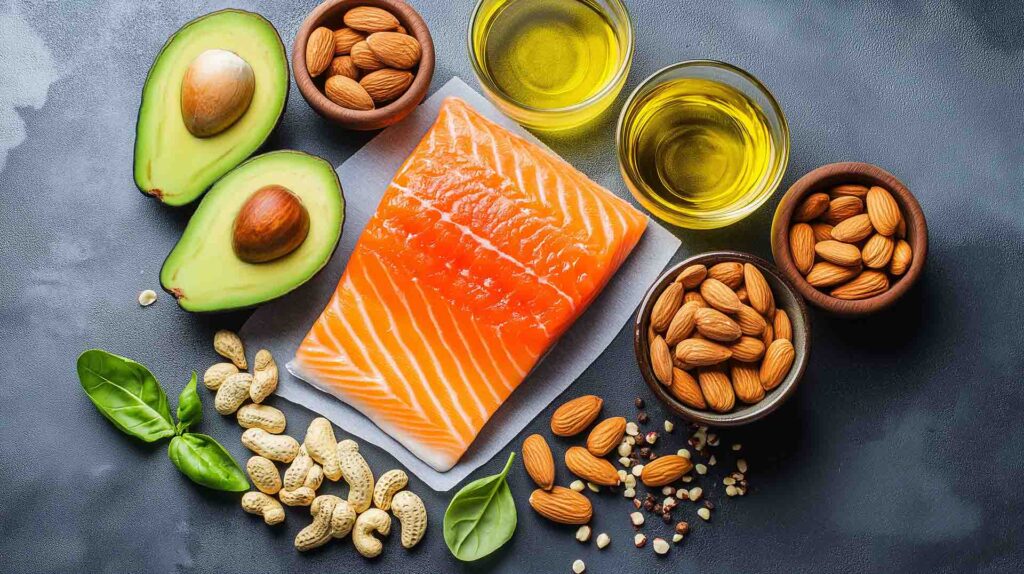
Foods rich in monounsaturated fats such as avocado, extra virgin olive oil and nuts have also been studied for their effect on cholesterol. Avocado consumption was associated with reduced total cholesterol compared with a habitual or low-fat diet (Okobi et al., 2023). These foods are also calorie-dense, so the evidence supports including them as a replacement for less favourable fats in your diet, rather than simply adding them on top of your current intake, for example, using mashed avocado as a substitute for butter on a sandwich.
What a High Cholesterol Diet Plan Looks Like in Practice
On paper, this means building meals around a combination of these food groups consistently, rather than picking one and hoping for a dramatic result: a soluble-fibre source at breakfast (oats, or a legume-based dish later in the day), a switch from butter or other saturated fats to olive oil or avocado where you can, and where appropriate, a fortified food or supplement supplying plant sterols. None of these changes work in isolation the way a single “superfood” headline might suggest — the research consistently points to combined, sustained dietary patterns rather than any one ingredient.
Why a Personalised Approach Matters More Than a Generic List
A generic cholesterol food list doesn’t account for what’s actually driving your numbers — genetics, your current diet, other markers like fasting insulin or inflammation, other health conditions, or medications you may already be on. A full nutritional assessment looks at your blood results and your actual diet together and builds a plan around what’s realistic for you to sustain. This works alongside any medical treatment your GP has already recommended and any changes to existing medication should always be discussed with your doctor.
If you’ve been told your cholesterol is high and want to understand how to navigate this, book a free 20-minute discovery call.



References
Cicero, A. F. G., Fogacci, F., Giovannini, M., Rizzoli, E., Grandi, E., D’Addato, S., & Borghi, C. (2023). The effect of dietary supplementation with plant sterols on total and LDL-cholesterol in plasma is affected by adherence to Mediterranean diet: Insights from the DESCO randomized clinical study. Nutrients, 15(21), Article 4555. https://doi.org/10.3390/nu15214555
Fontané, L., Pedro-Botet, J., Garcia-Ribera, S., Climent, E., Muns, M. D., Ballesta, S., Satorra, P., Flores-Le Roux, J. A., & Benaiges, D. (2023). Use of phytosterol-fortified foods to improve LDL cholesterol levels: A systematic review and meta-analysis. Nutrition, Metabolism and Cardiovascular Diseases, 33(8), 1472–1480. https://doi.org/10.1016/j.numecd.2023.04.014
Ghavami, A., Ziaei, R., Talebi, S., Barghchi, H., Nattagh-Eshtivani, E., Moradi, S., Rahbarinejad, P., Mohammadi, H., Ghasemi-Tehrani, H., Marx, W., & Askari, G. (2023). Soluble fiber supplementation and serum lipid profile: A systematic review and dose-response meta-analysis of randomized controlled trials. Advances in Nutrition, 14(3), 465–474. https://doi.org/10.1016/j.advnut.2023.01.005
Okobi, O. E., Odoma, V. A., Okunromade, O., Louise-Oluwasanmi, O., Itua, B., Ndubuisi, C., Ogbeifun, O. E., Nwatamole, B. C., Elimihele, T. A., Adekunle, J. O., Adekunle, A. A., Obi, C. B., & Evbayekha, E. O. (2023). Effect of avocado consumption on risk factors of cardiovascular diseases: A systematic review and meta-analysis. Cureus, 15(6), e41189. https://doi.org/10.7759/cureus.41189