
The Bone Health Warning Sign Most People Miss
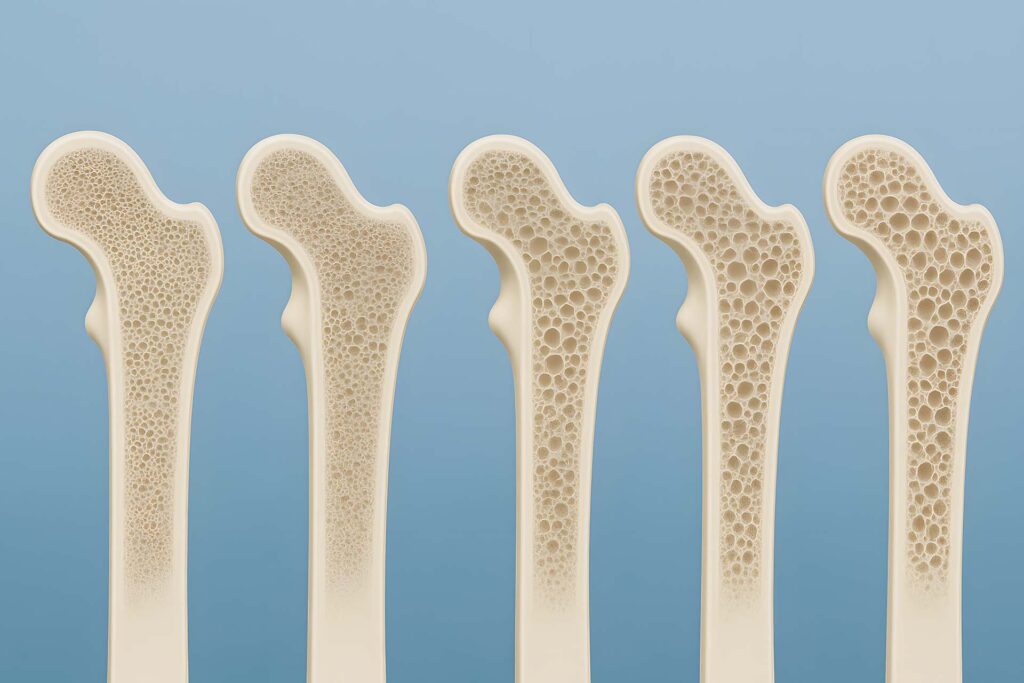
Osteopenia doesn’t hurt. It doesn’t show up on the outside. Most women find out they have it only after a scan or a fracture — by which point some bone density has usually already been lost. Here’s what it actually is, and what you can do about it before it becomes something more serious.
What Osteopenia Is, and Why It’s Easy to Miss
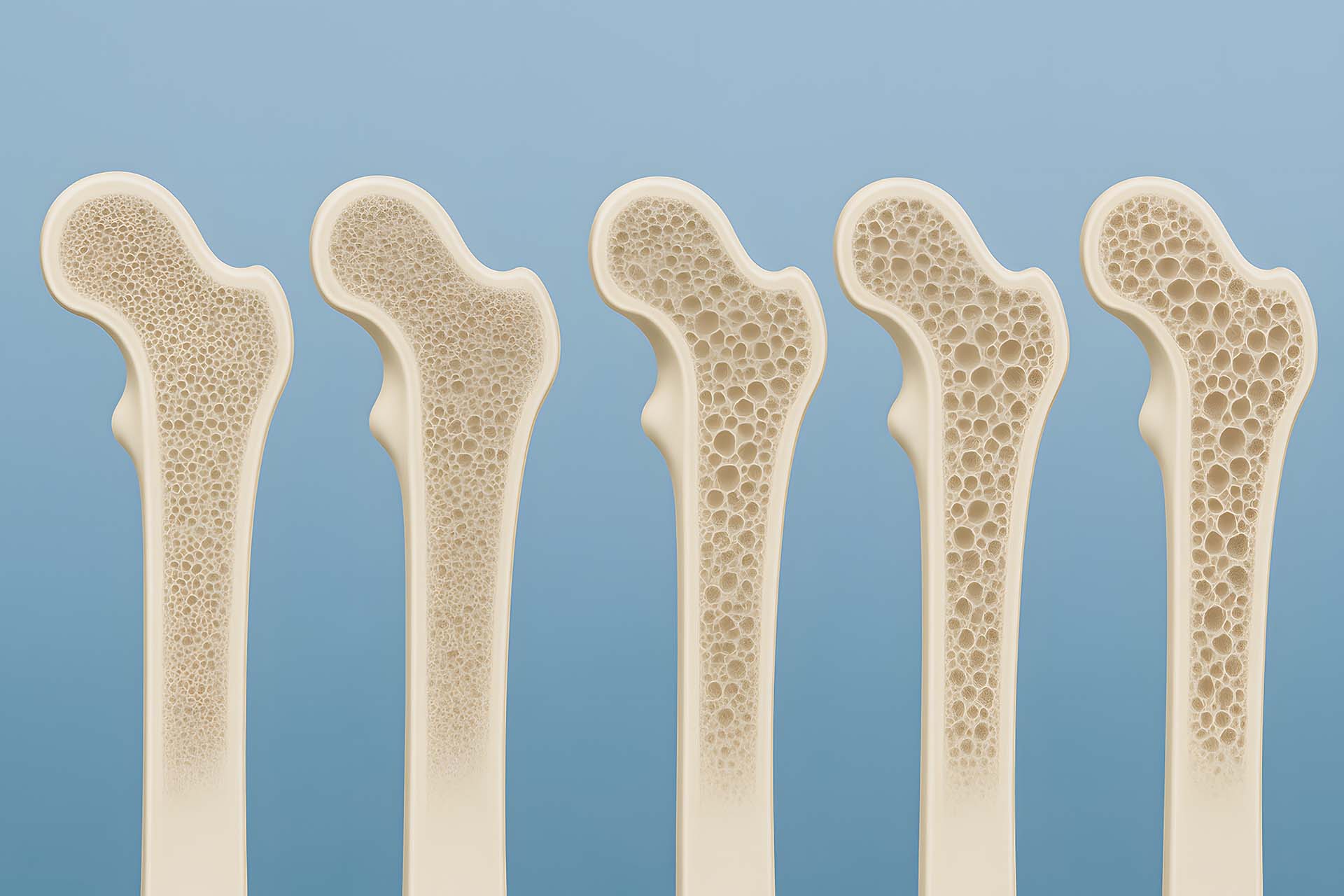
Osteopenia means bone density that’s lower than normal, but not yet low enough to be classified as osteoporosis. It develops silently, with no symptoms, which is exactly why it’s so often missed until a DEXA scan or a low-impact fracture reveals it. Bone density peaks in your mid-30s and gradually declines from there, with the rate of loss accelerating in the years around menopause.
The Nutrients That Actually Build Bone
Calcium tends to get all the attention, but bone health depends on several nutrients working together. A recent systematic review and meta-analysis found that combined calcium and vitamin D supplementation, particularly alongside structured exercise, produced measurable improvements in lumbar spine and femoral neck bone mineral density in postmenopausal women (Bai et al., 2025). The same review notes emerging evidence that adequate protein intake also supports bone mineral density, working alongside — rather than replacing — calcium and vitamin D (Bai et al., 2025). Gut health matters here too, because it affects how much of these important nutrients are actually being absorbed.
Why The Years Around Perimenopause Matter Most
As oestrogen drastically fluctuates during perimenopause and then declines after menopause, this can increase the risk of osteopenia as oestrogen plays an important role in protecting bone density (Zdzieblik et al., 2021). The five to ten years around menopause is when bone loss happens fastest (Lu et al., 2025), and then it continues to gradually decline through to old age. This makes the nutritional groundwork laid in your 40s and early 50s so important — starting a targeted plan a decade earlier can mean the difference between maintaining a safe density threshold and falling below it later in life.
What Can a Nutritionist Do For Bone Health?
If you have had a DEXA scan carried out by your GP or you’re being proactive and starting to look at what perimenopause and menopause can involve, then definitely check in with a nutritionist. All osteopenia and osteoporosis prevention starts with diet and ensuring you are getting enough calcium, vitamin D, protein and other nutrients needed for healthy bone formation. A DEXA scan gives an objective starting point — a clear picture of where your bone density sits right now. A nutritionist can analyse your diet and provide an easy to follow nutrition and supplement plan, built around your specific results and any medications you’re already using. With the correct diet and lifestyle interventions, clinical trials have shown that bone density can be significantly improved when given the right support (Duangjai et al., 2025; Lampropoulou-Adamidou et al., 2022; König et al., 2018; Platt et al., 2025).
If you’ve had a concerning DEXA result, or want to get ahead of bone density loss before it starts, book a free 20-minute discovery call.

Calcium Boosting Recipes:
Are you getting enough calcium in your diet?
Add your email to the form below and I will send you a link to a free calculator to work out your average daily calcium intake:
References
Bai, J., Huang, W., Yan, R., & Du, X. (2025). Effects of combined exercise and calcium/vitamin D supplementation on bone mineral density in postmenopausal women: A systematic review and meta-analysis. Nutrients, 17(24), Article 3866. https://doi.org/10.3390/nu17243866
Duangjai, A., Srivilai, J., Nangola, S., & Amornlerdpison, D. (2025). Calcium and vitamin D supplementation with and without collagen on bone density and skin elasticity in menopausal women—A randomized controlled study. Clinics and Practice, 15(9), 168. https://doi.org/10.3390/clinpract15090168
König, D., Oesser, S., Scharla, S., Zdzieblik, D., Gollhofer, A. (2018). Specific collagen peptides improve bone mineral density and bone markers in postmenopausal women—A randomized controlled study. Nutrients, 10(97). https://doi.org/10.3390/nu10010097
Lampropoulou-Adamidou, K., Karlafti, E., Argyrou, C., Makris, K., Trovas, G., Dontas, I. A., Tournis, S., & Triantafyllopoulos, I. K. (2022). Effect of calcium and vitamin D supplementation with and without collagen peptides on volumetric and areal bone mineral density, bone geometry and bone turnover in postmenopausal women with osteopenia. Journal of Clinical Densitometry, 25(3), 357-372. https://doi.org/10.1016/j.jocd.2021.11.011
Lu, B., Han, Q., Zhao, S., Ding, S., Bao, G., & Liu, Y. (2025). Associations between hormones, metabolic markers, and bone mass in perimenopausal and postmenopausal women. Journal of Bone and Mineral Metabolism, 43, 392–40. https://doi.org/10.1007/s00774-025-01595-x
Platt, O., Bateman, J., & Bakour, S. (2025). Impact of menopause hormone therapy, exercise, and their combination on bone mineral density and mental wellbeing in menopausal women: A scoping review. Frontiers in Reproductive Health, Menopause, 7(1542746). https://doi.org/10.3389/frph.2025.1542746
Zdzieblik, D., Oesser, S., & König, D. (2021). Specific bioactive collagen peptides in osteopenia and osteoporosis: Long-term observation in postmenopausal women. Journal of Bone Metabolism, 28(3), 207-213. https://doi.org/10.11005/jbm.2021.28.3.207