
The Problem You’re Probably Facing
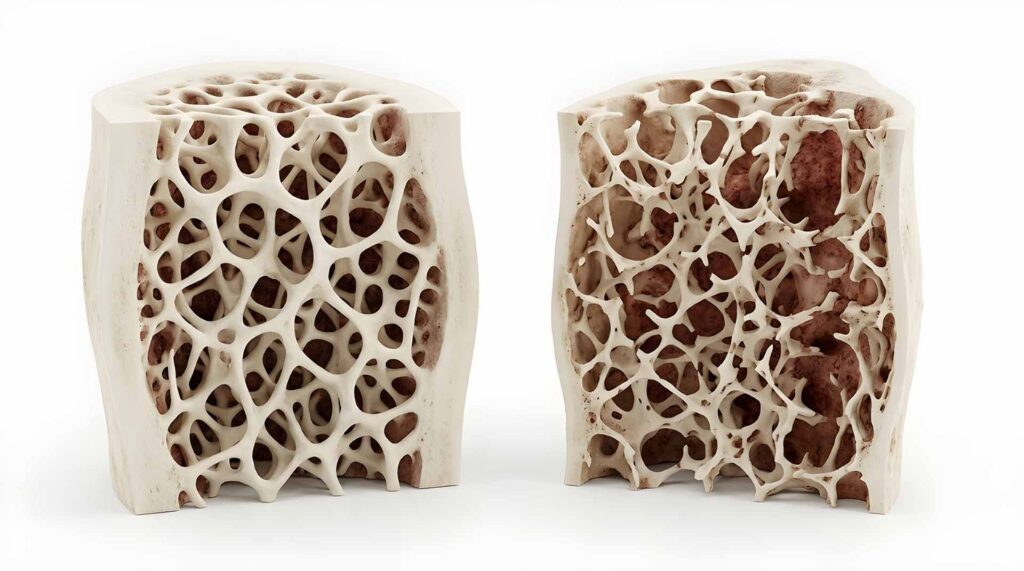
Bone density loss is silent for years before it shows up — usually on a DEXA scan, or after a fracture from something as minor as a stumble. The words “osteopenia” or “osteoporosis” often arrive as a shock, especially if you’ve always considered yourself healthy. You might have been told to take calcium and get more sunlight, with little explanation of how much, what form, or how the rest of your diet fits in.
If you’ve started bone medication, you may not have been told that calcium timing, vitamin D status and gut health all affect how well it works — leaving you unsure whether the medication alone is doing enough.
How I Approach It
Bone health depends on more than calcium. I build a plan around the full nutritional picture: calcium, vitamin D, magnesium, protein, collagen matrix, and gut absorption — the factors that actually determine whether the nutrients you’re taking in are reaching your bones.
What’s the treatment plan?
- A free 20-minute discovery call to talk through your current bone health status and any results you already have.
- A full initial consult covering medical history, medications, diet, sun exposure and gut health.
- A review of findings consult with a personalised dietary and supplement plan.
- A referral to your GP for a DEXA scan if you don’t have a recent baseline, plus a vitamin D blood test where relevant.
- Ongoing check-in consults to review progress and adjust the plan.
- A follow-up DEXA scan at around 12 months to compare results.
I work alongside bisphosphonate medication where it’s already part of your care — this is a complement to medical treatment, not a replacement for it.
What This Can Support
- A personalised approach to slowing bone density loss, built around your own results rather than generic advice.
- An objective before-and-after data point through DEXA scan comparison.
- A clearer understanding of what’s actually driving the issue, beyond “take more calcium”.
Why Timing Matters
Bone density loss accelerates in the decade following menopause. Starting a targeted nutrition plan earlier in that window — rather than waiting for a concerning result — gives more room to work with. It’s never too late to start, but the sooner you do, the more of that window you keep.
Get Started
Book a free 20-minute discovery call to talk through your bone health and whether a nutrition-led approach is right for you.