

What Perimenopause Does to Digestion
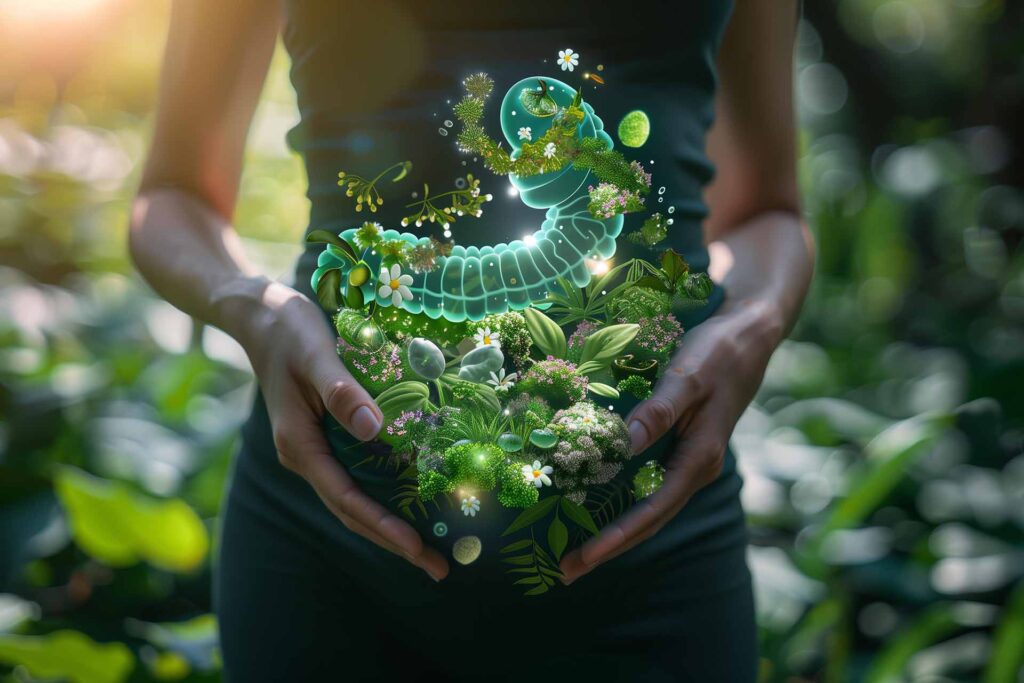
Perimenopause gets talked about almost entirely in terms of hormones — hot flushes, mood swings, sleep. What’s discussed far less is the role your gut plays in all of it. A growing body of research is showing that the gut and your hormones are far more connected than most of us were ever told (Lim et al., 2026).
Why Perimenopause Symptoms Aren’t “Just Hormonal”
Perimenopause is a systemic transition, not an isolated hormonal event. As oestrogen fluctuates, it affects inflammation, blood sugar regulation, thyroid function and gut function all at once (Lim et al., 2026). That’s part of why symptoms rarely show up one at a time — the brain fog, the joint aches and the digestive changes are often connected, even though they’re usually treated separately.
How Gut Health Influences Hormone Regulation
Your gut microbiome plays a role in how oestrogen is metabolised and recirculated in the body, through a group of bacterial genes collectively known as the estrobolome (Lim et al., 2026; Wang et al., 2025). Reduced gut microbial diversity and altered ratios of key bacterial groups have been associated with higher inflammation during perimenopause — and inflammation is a key driver behind many of the symptoms women experience during this stage, from joint pain to mood changes (Lim et al., 2026). This doesn’t mean gut health is the whole story, but it’s a piece that’s frequently left out of the conversation entirely.
Nutritional Strategies That Support Both Systems
A nutrition approach for perimenopause that only focuses on calcium and protein misses part of the picture. Higher dietary fibre intake and phytoestrogen-rich foods have been studied as potential adjuncts to standard treatment for symptom management during perimenopause, although hormone replacement therapy remains the primary clinical intervention (Lim et al., 2026). Supporting gut diversity — through fibre variety, fermented foods where appropriate, and reducing the dietary factors that drive inflammation — can be just as relevant to symptom management as the more commonly discussed nutrients.
What A Personalised Assessment Looks Like
Because every woman’s presentation is different, a thorough assessment looks at the whole picture: symptoms, medical history, current medications (including MHT if you’re using it), diet, lifestyle and any existing pathology. From there, a plan is built around what’s actually going on for you — not a generic perimenopause protocol.
If you are interested in learning more about nutrition and symptoms of perimenopause and menopause, book in for a free 20 minute discovery call below.

References
Lim, M. J. S., Parlindungan, E., See, E., Gan, C. H., Yap, R., & Yong, G. J. M. (2026). Diet, the gut microbiome, and estrogen physiology: A review in menopausal health and interventions. Nutrients, 18(7), Article 1052. https://doi.org/10.3390/nu18071052
Wang, H., Shi, F., Zheng, L., Zhou, W., Mi, B., Wu, S. & Feng, X. (2025). Gut microbiota has the potential to improve health of menopausal women by regulating estrogen. Frontiers of Endocrinology, 16, 1562332. https://doi.org/10.3389/fendo.2025.1562332